'The expeditious enactment of labour codes and strategic measures to bridge the skills jobs gap are critical.'

With the strain and anxiety of the longest Lok Sabha polls now behind the leaders, governance, with consensus, is the next step.

The Met department blamed the malfunctioning of sensors kept at the Automated Weather Station for the gaffe.

The rains after arriving over Kerala will quickly cover Tamil Nadu and Karnataka, but then might slacken a bit, which could delay its arrival over Northwest India.

High vegetable prices are expected to keep food inflation firm in the months to come.
'Traders must adopt digital payments as soon as possible within a set timeframe, as the nation is moving rapidly towards digitisation.' 'Ignoring digital systems is not an option for strengthening trade.'

After BJP candidate Mukesh Dalal's Surat win, Gujarat will see 25 Lok Sabha seats go to polls on May 7 with 266 candidates in the fray.

The government has extended the interim approval given to plant protection companies for use of drones for spraying specified pesticides. The approval has been extended for one more year starting from April 18, 2024. All other terms and conditions for the use of drones for spraying plant protection chemicals including the standard operating procedures etc. will remain the same.

It is in more than a decade that the IMD has predicted 'above-normal' rains in the country.

The Food Safety and Standards Authority of India (FSSAI) has commissioned a quality check on MDH and Everest products. This follows complaints that several popular spice mixes of the two leading brands contained traces of ethylene oxide more than the permissible levels, official sources said. This move by FSSAI comes after Hong Kong and Singapore recalled variants of the two masala majors' products in their countries.

'India needs many more job creators, both in manufacturing and services, to make it big.' 'For that, the red carpet must be rolled out fully and for all investors without holding back,' suggests Nivedita Mookerji.
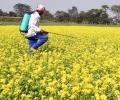
With farm Acts out of the picture, the government may look at reforming the input side of the agriculture sector - regulations and rules that govern seeds, fertilisers and plant chemicals. Sources said such a blueprint, which is aimed at making the life of farmers easier, with quicker approvals but not compromising on quality, is in the works as part of the 100-day agenda of Modi 3.0. Also, ways to administer fertiliser subsidy more effectively and cutting down on leakages and diversions to build on the success of neem-coated urea are being thought of.

The Bharatiya Janata Party (BJP) on Sunday pledged to make 30 million 'Lakhpati Didis', up from the 10 million rural women who have already achieved the feat. Prime Minister Narendra Modi on Sunday released the BJP's manifesto for the upcoming Lok Sabha elections. The manifesto says the ruling party will continue the quarterly financial disbursements under the Pradhan Mantri Kisan Samman Nidhi (PM KISAN) yojana.

Ahead of the seven-phase Lok Sabha elections, keeping food prices under check has emerged as one of the topmost priorities for the government. Food prices would likely have a bearing on the preferences of voters. In the past, there have been instances when governments have been voted out over rising food inflation.

Ahead of the upcoming elections, political parties have started announcing incentives to benefit women, but what do women truly seek for genuine gender parity, asks Nivedita Mookerji.

Onion and potato production is expected to be down in the 2023-24 crop year, while the tomato output could be marginally higher, the Department of Agriculture's first advance estimates of horticultural output released on Thursday showed. "Production of onion in 2023-24 is expected to be around 25.47 million tonnes compared to around 30.20 million tonnes last year due to a decrease of 3.43 million tonnes in Maharashtra, 0.99 million tonnes in Karnataka, 0.35 million tonnes in Andhra Pradesh and 0.31 million tonnes in Rajasthan," the official statement by the department of agriculture said.

In August 2021, Nick Read, chief executive of Vodafone Plc at the time, did not mince his words while speaking about the India business in an earnings call. Replying to an analyst's question on Vodafone Idea, a venture with the Aditya Birla Group that had piled on huge debts and worrisome losses, Read described it as a highly stressed situation that "they (Vodafone Idea) are trying to navigate... "We, as a group, try to provide them as much practical support as we can, but I want to make it very clear, we are not putting any additional equity into India.''

Startup founders need to sit up and think about how not to take stardom for granted and how not to disappoint their fans who have stood in long queues for those precious selfies with popular entrepreneurs, notes Nivedita Mookerji.

The central government plans to increase the number of highly beneficial neem trees in the country from the existing one tree for every 50 Indians to one tree for every 10 Indians to meet the rising demand from different sectors for neem oil. Presently, India has 18-20 million neem trees in the country, of which 40-45 per cent are in Uttar Pradesh, followed by Maharashtra, Rajasthan, and Tamil Nadu, among others. To achieve the target, the number of neem trees has to rise to almost 140 million.

Going by the RBI directive and the overall narrative, Paytm may have lost the rigour of stress tests, audits and compliance.
 © 2026 Rediff.com - Investor Information - Advertise with us - Disclaimer - Privacy Policy - Sitemap - Feedback - About us - Terms of use - Grievances